Blog
Say It in the First Ten Minutes
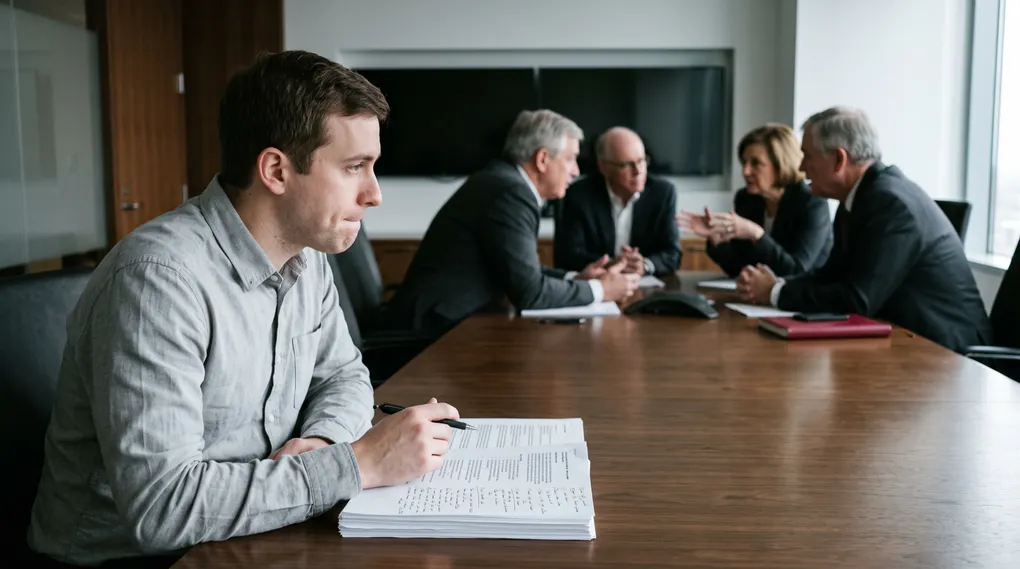
I watched a lad sit through fifty minutes of a meeting he should have owned.
He knew that subject better than anyone at the table. He had run it for two years. He had read the pack twice, and I could see the notes down the margin from where I was sat. And for fifty minutes he said nothing except “morning” and “yeah, fine”.
I knew what he was waiting for, because I used to do it myself. He was waiting until he had it perfect. Until the point was fully formed, watertight, impossible to knock over. He did not want to say something half-baked in front of the people who decide things.
At minute fifty-one he said the sharpest thing anyone said all morning.
The chair nodded, said “good point, we’ll pick that up”, and moved to any other business. The decision had gone the other way twenty minutes earlier.
He did nothing wrong. He was the best prepared person in that room. And he walked out of it having changed nothing at all.
The room is not an exam
Here is the mistake, and it is such an easy one to make when you are ambitious and you care about being taken seriously.
You treat the meeting like a test of who is right. So you prepare like it is a test. You get your evidence straight, you anticipate the objections, you wait for the moment where your bit fits properly.
But a meeting is not an exam. It is a room where a group of people slowly talk themselves into a direction, mostly without noticing they are doing it. By the time you have your perfect point, they are not deciding any more. They are tidying up a decision they drifted into while you were polishing.
Being right at the end is worth almost nothing. Being useful early is worth a lot.
What the first ten minutes actually do
Speak in the first ten minutes and two things happen.
The first is obvious. You are in the conversation while it is still soft, before anyone has planted a flag they now have to defend.
The second is the one nobody tells you. Once you have spoken, you get heard differently for the rest of the meeting. Say nothing for forty minutes and you become furniture, and when you finally speak, people have to readjust to the idea that you talk. That readjustment costs you. Your point lands on a room that is slightly surprised you made one.
Speak early and you are simply one of the people in the discussion. Everything after that arrives without the friction.
I am not talking about grandstanding. I have sat with plenty of people who fill the air and say nothing, and everybody clocks them for exactly what they are. This is not about volume. It is about being in it.
What to say when you have nothing finished
The obvious objection is that you have not got anything worth saying yet in the first ten minutes. Fair enough. So say something that does not require you to be right.
Name what you are hearing. “It sounds like we’re actually deciding two different things here, the timing and whether we do it at all.” That is not a position. It is a service to the room, and it takes about eight seconds.
Bring the floor. You have something nobody senior in that room has, which is what it is actually like where the work happens. “Worth saying, we tried a version of this in March and it fell over on the handover.” Nobody can argue with what you saw. That is the most valuable thing you own and most people save it until it is too late to matter.
Ask the question that moves it, not the one that proves you read the pack. There is a real difference. One opens the thing up. The other is a performance of preparation and everyone can smell it.
None of those need you to have the answer. All of them get you in the room before it hardens.
Nobody is booking you on a course for this
There is a reason this matters more now than it did a couple of years ago.
The Team Leader apprenticeship, the most popular one in the country, has just lost its funding for new starts. So has Operations Manager, so has Chartered Manager, so has Coaching Professional, which happens to be my own professional standard. Sixteen standards in total. Existing apprentices finish, but that route up is closed to anyone starting now.
Whatever you think of the policy, the practical effect on you is simple. The old ladder where your employer paid for someone to teach you how to lead has fewer rungs on it. Nobody is going to book you on a two day course to learn how to be useful in a meeting.
Which leaves it with you. And honestly, that is not the worst news, because this particular skill was never really taught on a course anyway. It is built one meeting at a time, and you have got one this week.
Try it once
Pick your next meeting that matters. Decide beforehand that you will say something in the first ten minutes, and decide roughly what. Not the clever thing. The useful thing.
Then watch what happens to how the rest of the meeting treats you.
You will not get promoted for it on the Friday. But over a year of meetings, the difference between the person who is in it and the person who is prepared for it is enormous, and only one of them is in the room when it gets decided.
What did you not say in the last meeting you sat in?
If you know you are better than you come across in the room, that is worth half an hour of straight talk. Grab a free consultation and we will work out what is actually getting in your way.